-
Book Announcement
New Blood: How Youth in Zambia Are Reclaiming Politics
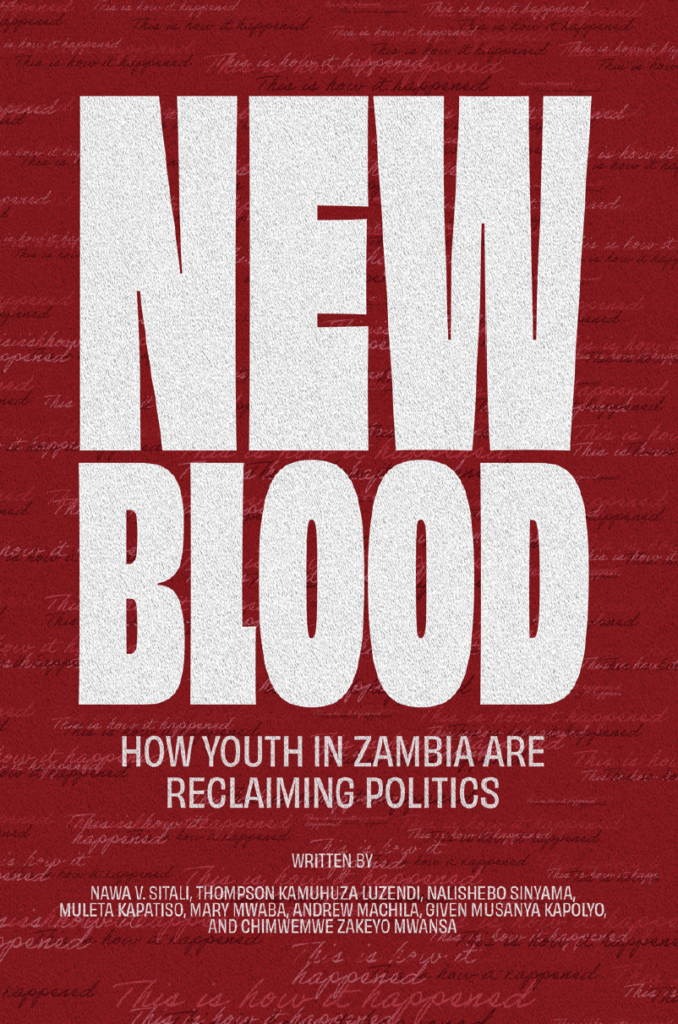
In 2018, Zambia grappled with political turmoil, a stifled democratic process, and marginalized youth voices. Physical violence among youth from different political factions was a hard reality. Amid this chaos, two friends from opposing parties began the Youth4Parliament (Y4P) movement, igniting a transformation that would reshape Zambia’s political landscape.
Discover how Y4P’s pioneering spirit united young activists across party lines, inspiring a historic shift in the country’s politics. From fostering youth leaders to run for office to mobilizing youth to vote and join an unprecedented emergence of social movements, Y4P’s journey is a testament to the power of youth determination.
Download the Book -
New Publication:
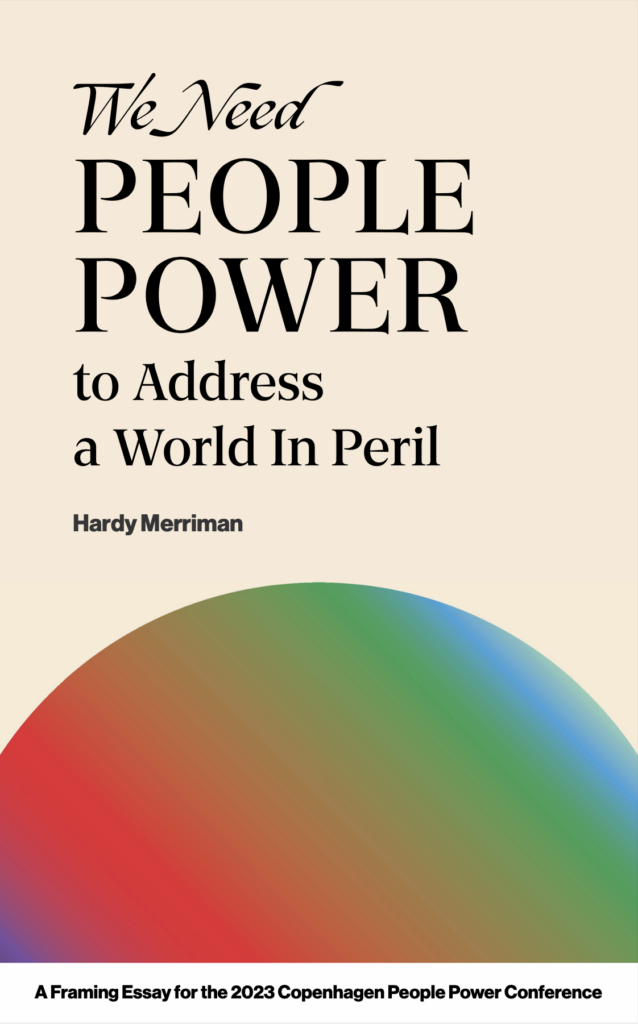
We Need People Power to Address a World in Peril is the framing essay for the 2023 Copenhagen People Power Conference.
It outlines the three interrelated crises of rising authoritarianism, climate change, and violent conflict and articulates the essential role that popular nonviolent movements play in addressing each of them.
Download a Free Copy -
New Publication:
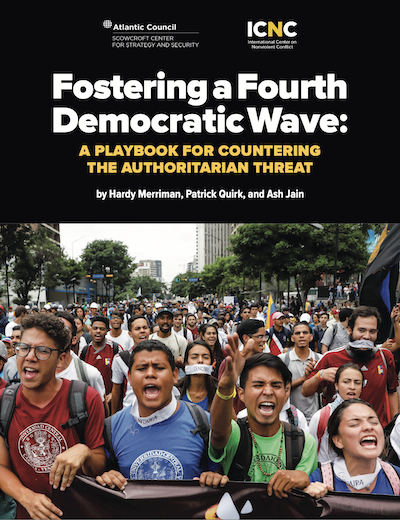
Fostering a Fourth Democratic Wave: A Playbook for Countering the Authoritarian Threat combines insights on civil resistance, democratic waves, autocratization, democratic backsliding, international law, and other disciplines to advance a foreign policy approach that supports and enables pro-democracy and human rights movements.
Watch the promotional video and download the publication:
Download a Free Copy -
Project Highlight:
The Civil Resistance Funders InitiativeThe Civil Resistance Funders Initiative fosters coordination and sharing of best practices in philanthropic support for movements for human rights, freedom, and justice.
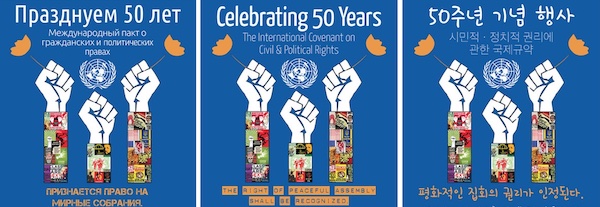
Drawing on insights from practitioners and scholars, a key deliverable will be a new 2024 publication, tentatively titled: Turning the Tide on Authoritarianism: A Funder’s Guide to Supporting Civil Resistance.
The project is led by ICNC president and principal investigator Hardy Merriman, in collaboration with ICNC executive director Ivan Marovic, and is made possible with the generous support of Humanity United.
Learn More
-
For Activists & Organizers
How Agent Provocateurs Harm Our Movements
by Steve Chase
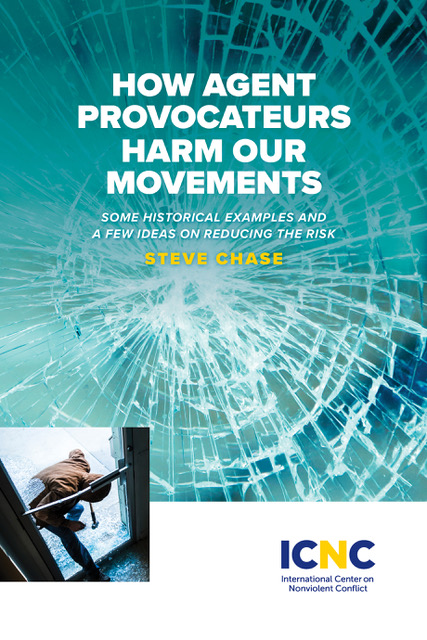
History shows us that peoples’ movements are more likely to succeed when they have unity among supporters, widespread participation, strategic planning, and nonviolent discipline. Unsurprisingly, movement opponents use agent provocateurs—fake activists working undercover—to behave in counterproductive ways that undermine these four keys to success.
Drawing from international examples, and an in-depth case study of the US Black Liberation Movement, this volume explores how agent provocateurs—and agent provocateur-like behavior—make movements smaller, weaker, and easier to defeat. It also offers some ideas for how activists can inoculate their movements against such harms and increase their chances of success.
• Download
• Purchase
• Watch the webinar presentation by the author
Learn More -
Second edition of :
The Path of Most Resistance: A Step-by-Step Guide to Planning Nonviolent Campaigns
by Ivan Marovic
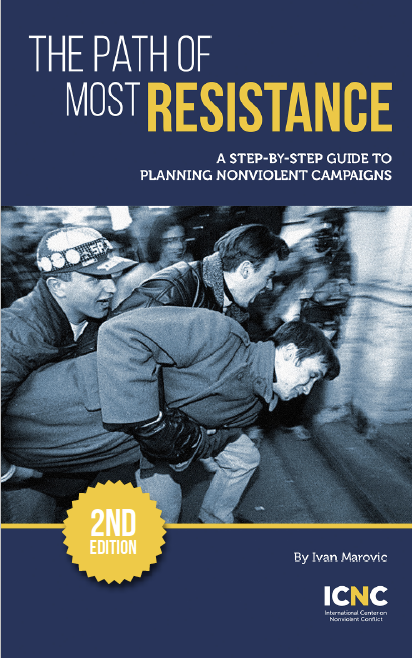
The Path of Most Resistance: A Step-by-Step Guide to Planning Nonviolent Campaigns is a practical guide for activists and organizers of all levels, who wish to grow their resistance activities into a more strategic, fixed-term campaign. It guides readers through the campaign planning process, breaking it down into several steps and providing tools and exercises for each step.
The Second Edition released in March 2021 includes chapters on tactics and running a tactical planning workshop, and a Foreword by Hardy Merriman.
Free Download:
Learn More
• Second edition: English
• First edition: Catalan | French | Polish | Portuguese (Brazilian) | Spanish | Urdu -
Visit our full resource library to find hundreds of resources on civil resistance in English and over 70 languages.
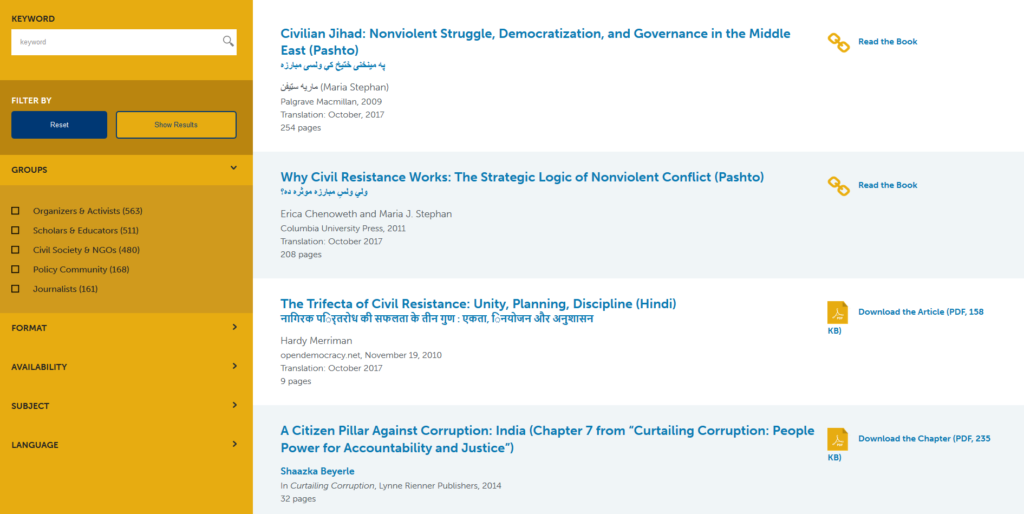
Or, if you are interested in civil resistance and don’t know where to start, we’ve made a list of general introductory resources–many of them short articles–to introduce you to the field. See our list of ten key resources for activists and organizers.
Visit the Resource Library -
ICNC Translations Program
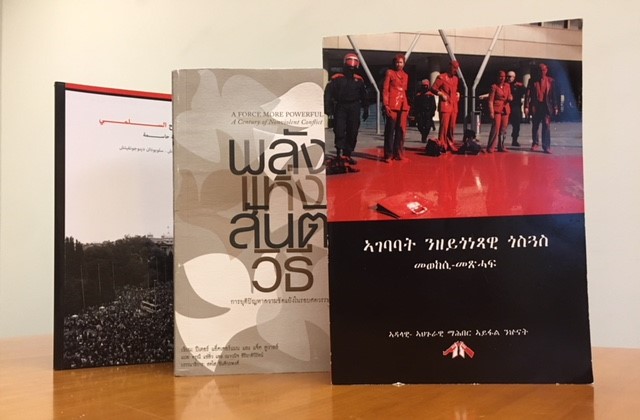
Translating civil resistance literature into diverse languages is one of the most powerful ways to spread knowledge and increase the effectiveness of nonviolent movements struggling for rights, freedom, and justice. Learn more about our translations program or read our glossary of key terms.
We also currently host resources on civil resistance in over 70 languages and dialects on our website.
Find Translated Resources
-
For Scholars & Students
The discipline of civil resistance has developed enormously in recent years, driven by new quantitative and qualitative scholarly research, as well as by numerous nonviolent movements around the world.
ICNC runs a number of grant-supported academic and educational programs to meet the growing demand for cutting edge research, applied knowledge and practical skills in this field. Look at our research, writing, teaching and other educational offerings and review current calls for proposals or applications.
Learn More -
Academic Online Curriculum
 ICNC’s Academic Online Curriculum on Civil Resistance (AOC) is an online resource to advance curriculum development, teaching, and research on civil resistance. It offers an extensive and regularly updated set of resources in this field, organized into clearly structured topics and case studies, and drawn in part from content that we and various academic collaborators developed for the ICNC university seminars we’ve led since 2009.
Anyone can register to use the AOC at any time and it is free to use.
Topics on the AOC include:
– Civil Resistance: Nature, Ideas and History
– Strategic Considerations in Civil Resistance Struggles
– Types of Civil Resistance StrugglesAnd more!
Register Now! -
Calls from ICNC Academic Initiatives
 Throughout the year, ICNC is offering a number of academic opportunities, resources, and support that it makes available to scholars and students. The field of civil resistance has grown immensely and these academic programs aim to respond to the growing demand for knowledge and skills and contribute to expanding the quality of education, research, and curriculum related to civil resistance. This page includes the current and past calls for the ICNC’s educational and research programs, such as learning opportunities, curriculum support, and research grants.
One of our calls, the Rapid Field Research and Data Collection Program, accepts applications on a rolling basis and interested applicants can apply for the program throughout the year.
Learn More -
New from ICNC Press:
 Preventing Mass Atrocities: From a Responsibility to Protect (RtoP) to a Right to Assist (RtoA) Campaigns of Civil Resistance
by Peter Ackerman and Hardy Merriman
Available in: English, Arabic, and SpanishEvents of the last decade demand new approaches to atrocity prevention that are adaptable, innovative and independent of a state-centered doctrine. With the aim of reducing risk factors such as civil war, we argue for a new normative framework called The Right to Assist (RtoA). […]
See ICNC Press Publications
-
For the Policy Community
New Publication:
Fostering a Fourth Democratic Wave:
A Playbook for Countering the Authoritarian Threat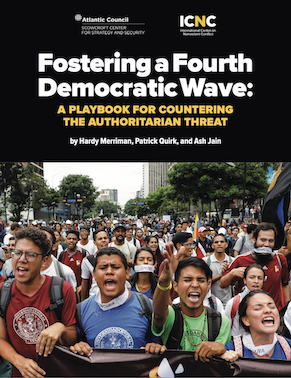
Fostering a Fourth Democratic Wave combines insights on civil resistance, democratic waves, autocratization and democratic backsliding, international law, and other disciplines to advance a foreign policy approach that supports and enables pro-democracy and human rights movements. It:
1. Proposes new approaches and tools to support civil resistance movements
2. Advances a new international norm — the “Right to Assistance”
3. Develops strategic and tactical options to constrain authoritarian regimes and drive up the cost of their repression
Download a Free Copy -
ICNC Releases Major Study on International Support to Nonviolent Campaigns
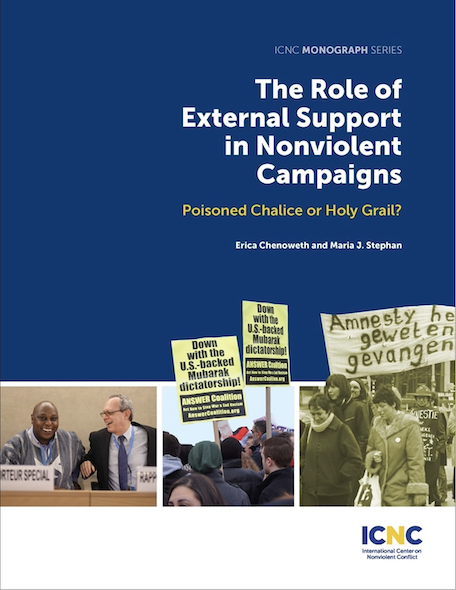 ICNC is proud to present the newest addition to its popular Monograph Series, The Role of External Support in Nonviolent Campaigns: Poisoned Chalice or Holy Grail? by Drs. Erica Chenoweth and Maria J. Stephan, authors of the groundbreaking civil resistance classic, Why Civil Resistance Works.
Published by ICNC Press, this new report employs original, qualitative, and quantitative data to examine the ways that external assistance impacted the characteristics and success rates of post-2000 revolutionary nonviolent uprisings.Download the full monograph for free here.
Watch the March 3 webinar with the renowned authors here.
Read More
-
Minds of the Movement Blog
Minds of the Movement is a blog for those interested in the ideas and experiences of people on the front line of civil resistance, and those who seek to understand the art and science of nonviolent struggle.
Learn More -
NEW BLOG POST
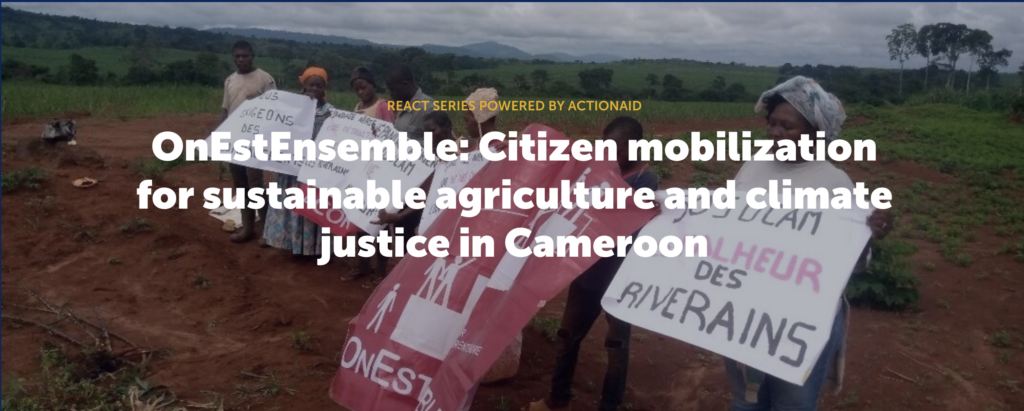
Anonymous writes: “We were around twenty local residents, members of the association, from various villages located around 120 kilometers from the sugar plantations in central Cameroon. On July 6, 2023, we gathered peacefully in front of the headquarters of a multinational company in Yaoundé’s administrative district to demonstrate our dissatisfaction with the destruction of our crops by the pesticides dumped on the fields by the company’s planes. In protest, we dumped the contaminated and visibly burnt crops-cassava leaves, groundnuts-in front of the agro-industrial company’s head office. […]”
Read more! -
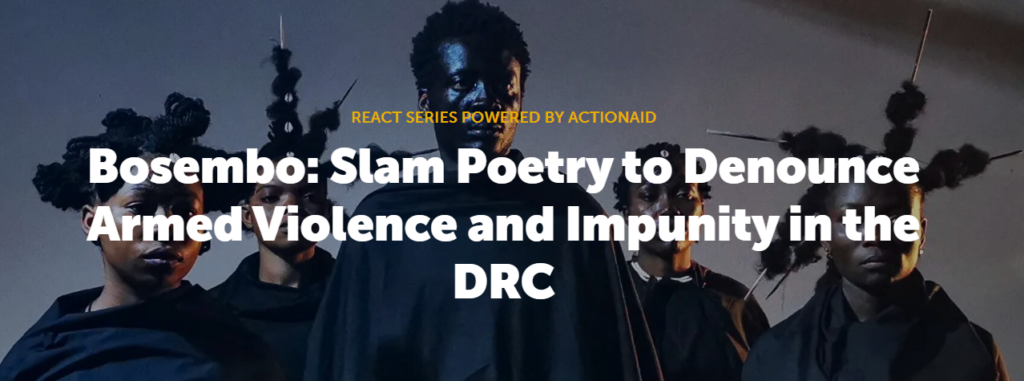
Feza Eliane writes: “Ben Kamuntu belongs to the generation of young Congolese born during the war who have never known peace. From an early age, he had to endure the death of his loved ones, the looting of his family’s possessions and the displacement caused by the war. As an adult, Ben Kamuntu joined the nonviolent citizens’ movement Lutte pour le changement LUCHA to urge the Congolese authorities and the international community to promote peace, justice and freedom in the Democratic Republic of Congo. […]”
Read more! -
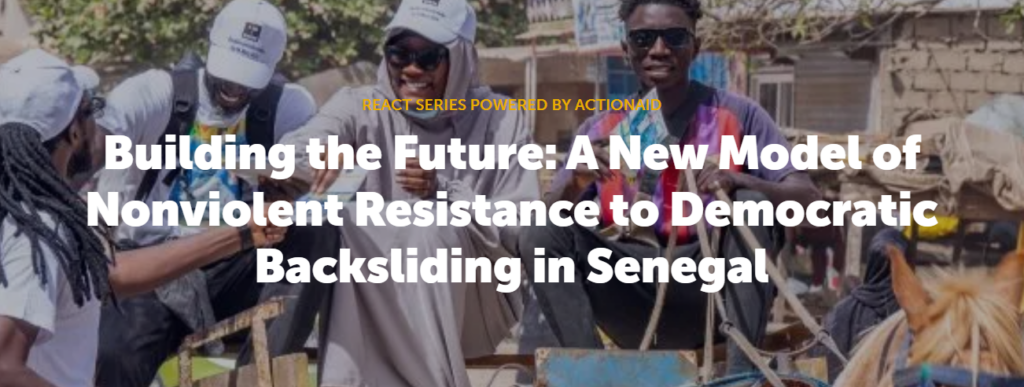
Abdou Khafor Kandji writes: “Last month, the Senegalese nonviolent movement Y en a Marre (Enough is Enough”) organized a silent march during which hundreds of Senegalese demanded the date of the presidential election to be set and political prisoners to be released. A few days after this popular demonstration, the two main demands were met. The Senegalese authorities released the political prisoners and set the election date for this Sunday, March 24. […]”
Read more!