ICNC's Academic Webinars are a series of online talks and visual presentations on critical ideas, cases, and questions related to civil resistance and nonviolent movements. They are intended for general learners, students, and interested professionals.
These hour-long webinars are offered bi-weekly, typically on Thursdays from 12:00-1:00pm EST. Scholars deliver 30-40 minute powerpoint presentations, which is followed by a 20-30 minute question and answer period. Preliminary readings may also be recommended prior to the presentation and will be sent in advance to those who register for the webinar.
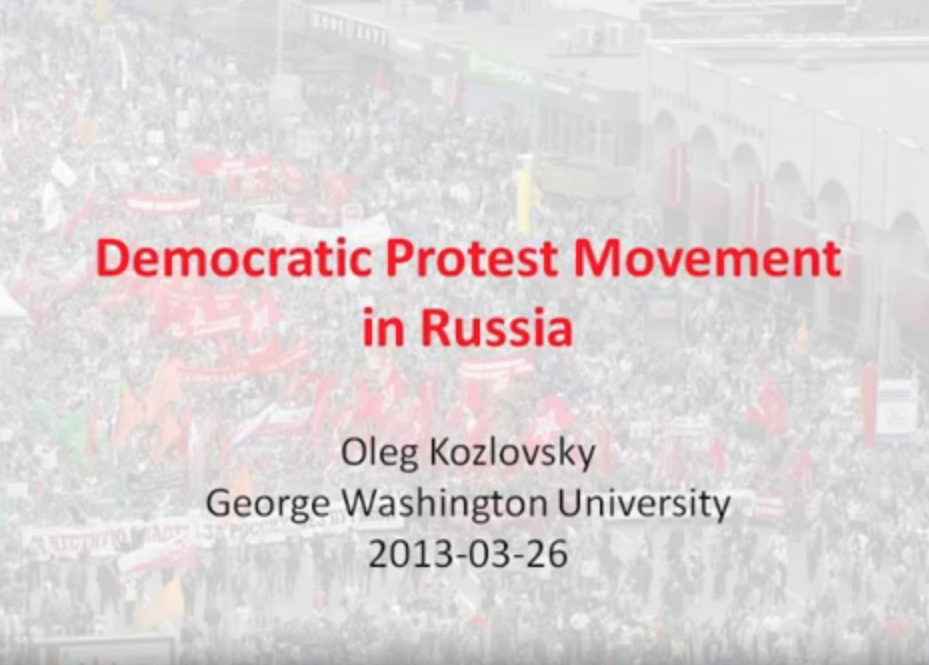
Oleg Kozlovsky, Fulbright Visiting Scholar, George Washington University Tuesday, March 26, 2013 / 12:00pm - 1:00pm EST
In December 2011 tens of thousands of Russians went to the streets of Moscow and other cities to protest fraud at recent parliamentary elections. This was a shock to the regime as well as the opposition even though both had long been preparing for mass demonstrations. The protests, though truly spontaneous and surprising, were by no means random. Instead, they were a result of gradual but radical changes in the Russian society due in no small part to contained but persistent political, social and cultural activism and autonomous civic organizing of previous years.
The regime responded with charges of propaganda and repression, which might have slowed down the resistance but did not suppress it. Facing a stalemate, the Russian protest movement now has to find new methods and tactics, increase its internal mobilization and outreach to other segments of the society and stay united.
Nichole Argo, Postdoctoral Fellow in Social and Decision Sciences, Carnegie Mellon University February 21, 2013
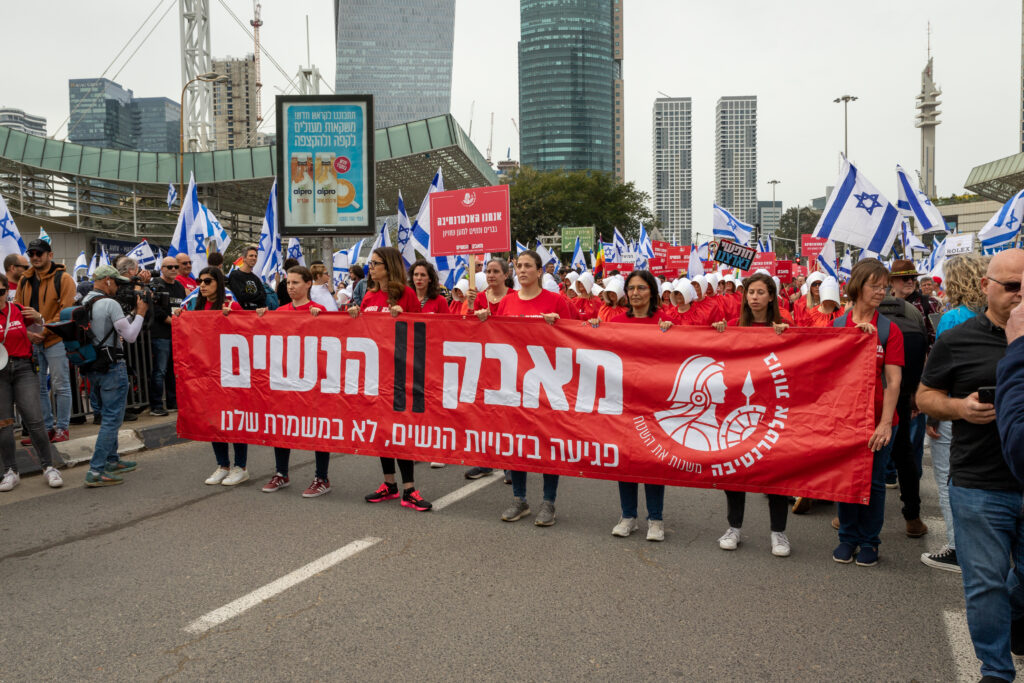
We surveyed Israelis in June 2012 to see how reminders of these nonviolent protests affected their perceptions of Palestinians, prospects for peace, their own sacred values, and more generally, their belief that groups can change. To our surprise, reminders of the protests led to negative assessments across all of these measures—more so than did reminders of Palestinian violence, or even stories of traffic woes.
This presentation focuses on the results of the survey, as well as what it may tell us about the process by which nonviolent campaigns affect intergroup psychology and transformation, particularly where there is a history (or competing strain) of violence.
Dr. Oliver Kaplan, Lecturer in Human Rights at the Josef Korbel School, University of Denver Wednesday, January 30
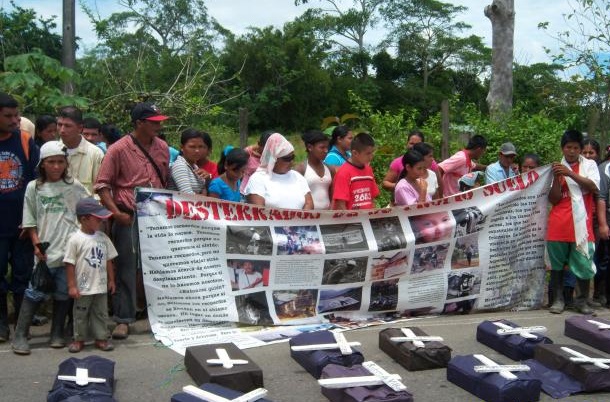
Civilians would seem powerless when facing violent and heavily armed actors in settings of civil conflict, and yet communities in various countries have found ways to avoid violence. In this presentation Dr. Kaplan discusses the various strategies he has documented that communities from around the world have used to retain autonomy and self-rule in the face of competition among multiple armed groups.
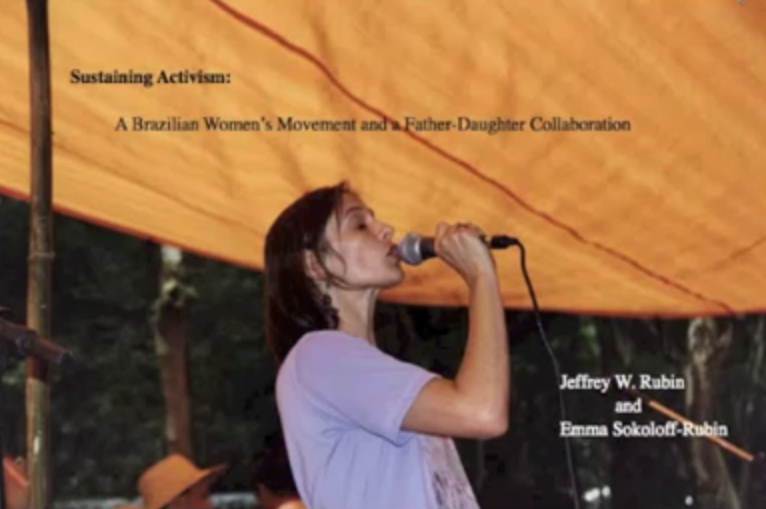
Jeffrey W. Rubin and Emma Sokoloff-Rubin January 25, 2013
In 1986, a group of young Brazilian women started a movement to secure economic rights for rural women and transform women's roles in their homes and communities. Together with activists across the country, they built a new democracy and fought for women's rights in the wake of a military dictatorship. Jeffrey W. Rubin and Emma Sokoloff-Rubin, a father-daughter research team, tell the behind-the-scenes story of this remarkable movement.
Dr. Benedetta Berti, Associate Fellow and Lecturer, Tel Aviv University January 17, 2013
Contrary to the conventional narrative Middle Eastern civil society has been active and involved in strategic non-violent struggle for years before the beginning of the massive social and political mobilizations of 2010 and 2011. The presentation looks at the characteristics of civil society and social movements in the Middle East and North Africa (MENA) region-focusing specifically on Tunisia and Egypt-describing the civil Society and social movements in the Middle East before the “Arab Awakening.”
Presented by: Dr. Joseph Bock, Director of Global Health Training at the Eck Institute for Global Health, University of Notre Dame, and Author of "The Technology of Nonviolence" Wednesday, December 5, 2012
Engaging in nonviolent resistance for political transformation during Gandhi's struggles in South Africa and British India has many similarities to more modern approaches. Some people claim that social media is the main ingredient. Is that correct? What technologies are most important? What else is needed for the success of nonviolent movements that social media cannot provide? Can't technology also be used by oppressive governments and troublemakers? Can't they use the information on digital maps that everyone else can see on the internet? And what happens when cell phone and internet services are interrupted or shut down completely?
This webinar covers the limits of technology for nonviolent resistance movements and offers insights about ethical dilemmas.
Presented by: Mary Joyce, Researcher & Consultant in Global Digital Activism, Editor of "Digital Activism Decoded" Thursday, November 29, 2012, 12:00pm - 1:00pm EST
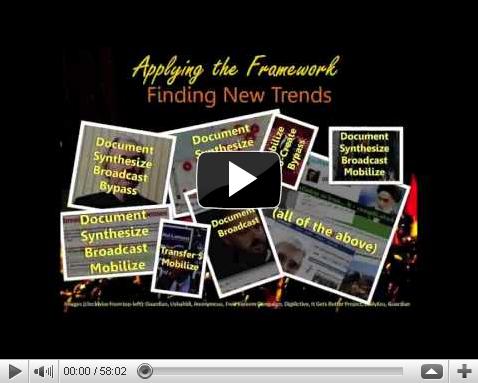
Gene Sharp created his list of 198 nonviolent methods in 1973. In the years since, media has become dramatically more accessible to activists. Media produced by activists can now have mass reach at low cost thanks to the ease of creating user-generated content and the multiple platforms that allow for near-free self-broadcast to a mass audience in a variety of textual and visual formats. How can the canon of nonviolent methods intelligently integrate these new capacities?
This presentation will review the initial findings of Digital 198, a crowdsourced project by Patrick Meier and Mary Joyce, that is collecting digital enhancements to the 198 analog nonviolent methods as well as new methods made possible by the peer-produced, self-broadcasted, highly attention-competitive, and near-free nature of digital media.
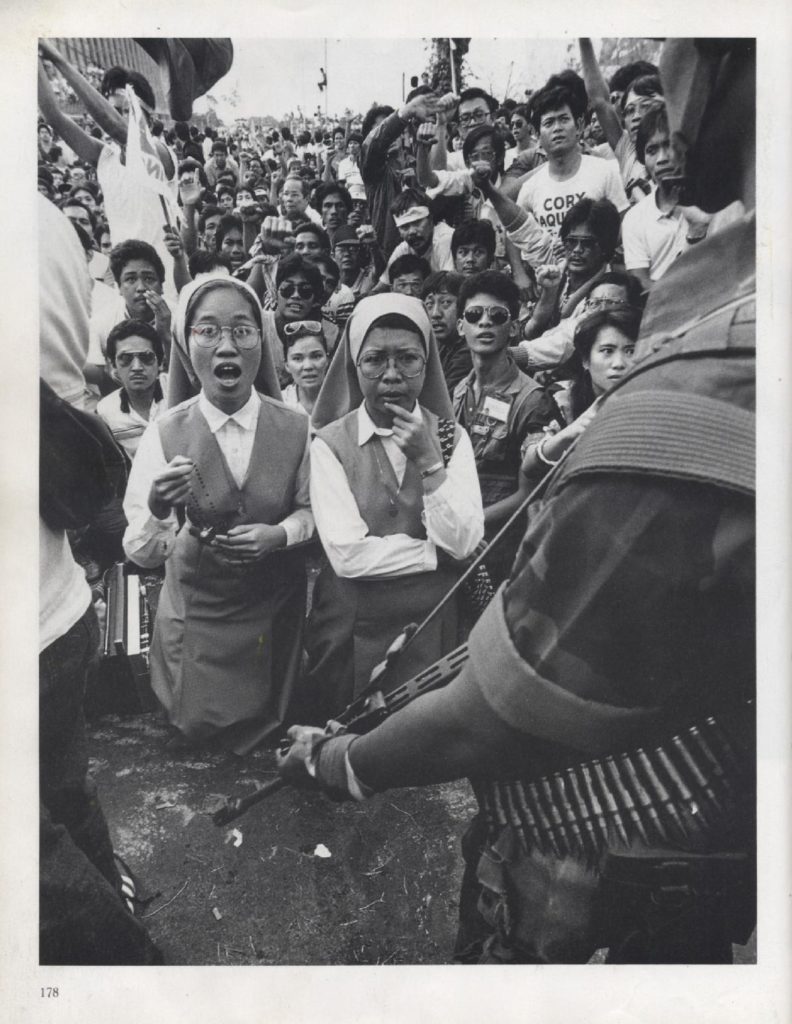
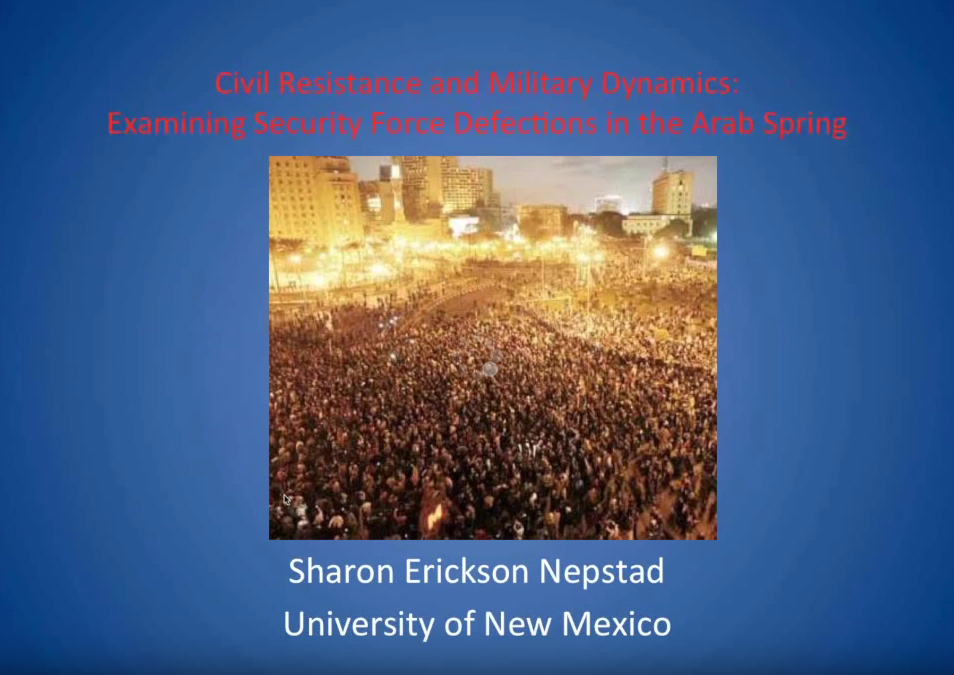
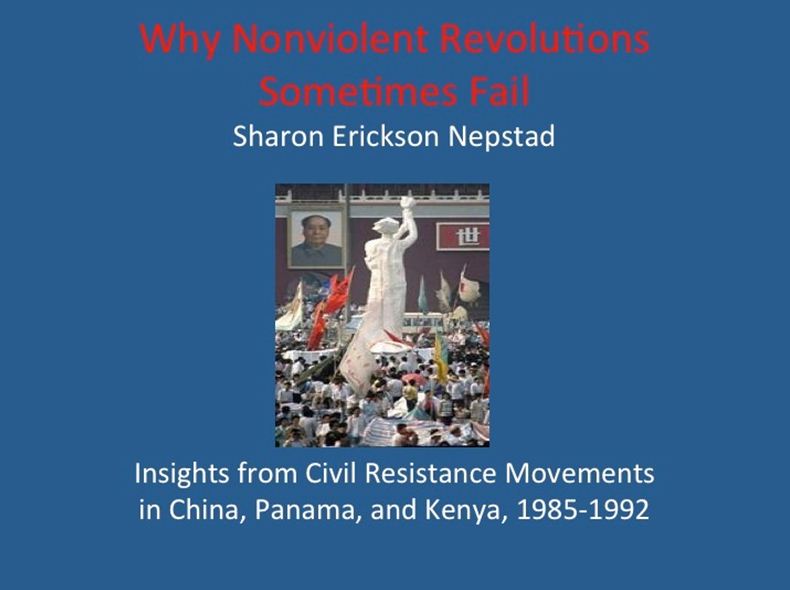
In the 1980s, the world was captivated as East Germans brought down the Berlin wall and the Filipino “people power” movement ousted long-standing dictator Ferdinand Marcos. Yet other civil resistance movements during this time failed to achieve political change. Researchers have largely focused on successful nonviolent uprisings. Little attention has been given to those movements that had great potential but did not achieve their goals. In this webinar, Dr. Nepstad explores three cases of failed civil resistance: the Chinese democracy movement of 1989, the struggle against Panamanian dictator General Manuel Noriega (1987-1989), and the attempt in Kenya to oust President Daniel arap Moi (1985-1992).
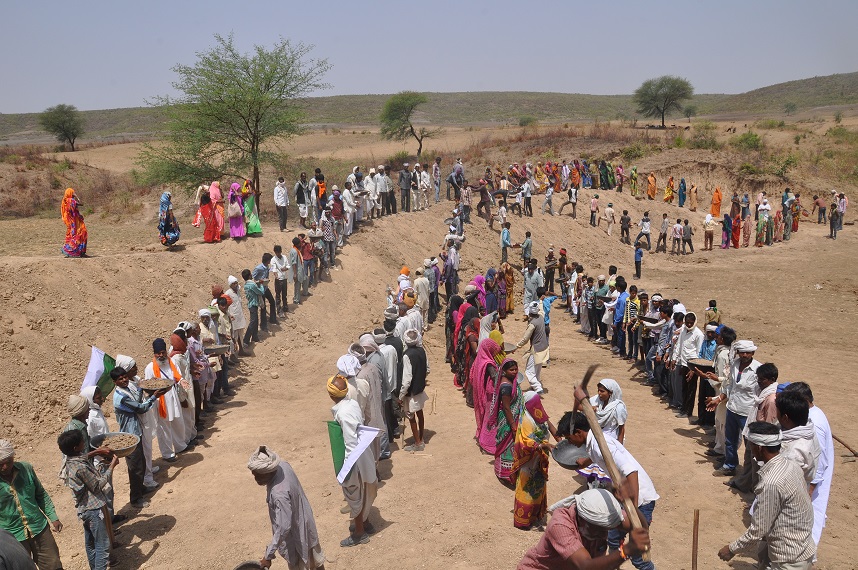
Kurt Schock is Associate Professor of Sociology and Global Affairs at Rutgers University, Newark. In many places the state serves as a land broker, facilitating peasant land dispossession and its transfer to capitalist and rentier classes. In response land rights counter-movements have emerged in the global South. Two movements are examined: Ekta Parishad in India and the Landless Workers' Movement (MST) in Brazil. These movements are significant in that they have forged strategies that rely on civil resistance.
When Occupy Wall Street and the ensuing Occupy movement captured the world's attention in the fall of 2011, the world wasn't exactly sure what hit it. Through a series of up-close portraits of the movement in both planning and execution, this webinar will explore how it has succeeded as well as what its challenges will be in the coming months. Drawing from his experience covering the Occupy movement since the early planning stages, Nathan Schneider will focus on the role of strategizing.
The story of Occupy Wall Street, of course, is not solely one about Occupy Wall Street. This was just one among other daring attempts to mount major mobilizations in the United States that season, several of which I was covering concurrently. As the Occupy movement spread, it became ever more clear that what was taking place was one manifestation of an emerging global movement. Now, as the movement enters an election year in the United States, it faces the challenge of launching a cluster of focused, interrelated campaigns, as well as mounting successful mass mobilizations that can change the media narrative and win tangible gains.
Nathan Schneider is an editor of Waging Nonviolence, a website of news and analysis on struggles for justice and peace around the world. Beginning in July and August of 2011, he was the first journalist to be allowed to cover the planning of what would become the Occupy movement. He has since written about it for Harper's, The New York Times, The Nation, the Boston Review, Truthout, Yes! magazine, The Catholic Worker, and more. He has also contributed to two of Occupy Wall Street's print publications, The Occupied Wall Street Journal and Tidal: Occupy Theory, Occupy Strategy.
In this webinar Bahraini journalist Nada Alwadi discusses the ongoing civil resistance movement in Bahrain (a small island monarchy in the Persian Gulf) which has been a part of the recent wave of popular revolts in the Middle East known as the Arab Spring. She revisits the timeline of events in Bahrain beginning in February 2011, when state repression of marches and protests around the country motivated the population to sustain their civil resistance mobilization and call for political reform. She also examines the role of U.S.-backed Saudi Arabia, which sent troops to help shore up the Bahraini monarchy and suppress the popular uprising. Alwadi sheds light on the media blackout in Bahrain, and the current political and communication challenges facing the country and its society in the wake of a brutal state crackdown on protesters, the media, hospital staff, and ordinary members of the movement. She also relates the untold story of a struggle which has been forgotten and abandoned by the world and received little coverage from international media outlets. Finally, Alwadi discusses the importance of civil resistance in Bahrain and its larger role in building a new, freer Middle East.
Nada Alwadi was a reporter for Alwasat, the most popular newspaper in Bahrain, and covered the pro-democracy protests this spring for multiple local and international media outlets (including USA Today). Ms. Alwadi was detained in April while reporting on the pro-democracy movement and forced to sign a statement saying that she would not write on or engage in any political activities, and was fired from her job. Ms. Alwadi is the co- founder of the Bahrain Press Association, which seeks to defend Bahraini journalists from government repression. She chose to leave Bahrain earlier this year due to concerns over her personal safety, and is currently working from the U.S. to spread knowledge about the situation in Bahrain and the Middle East as a whole.
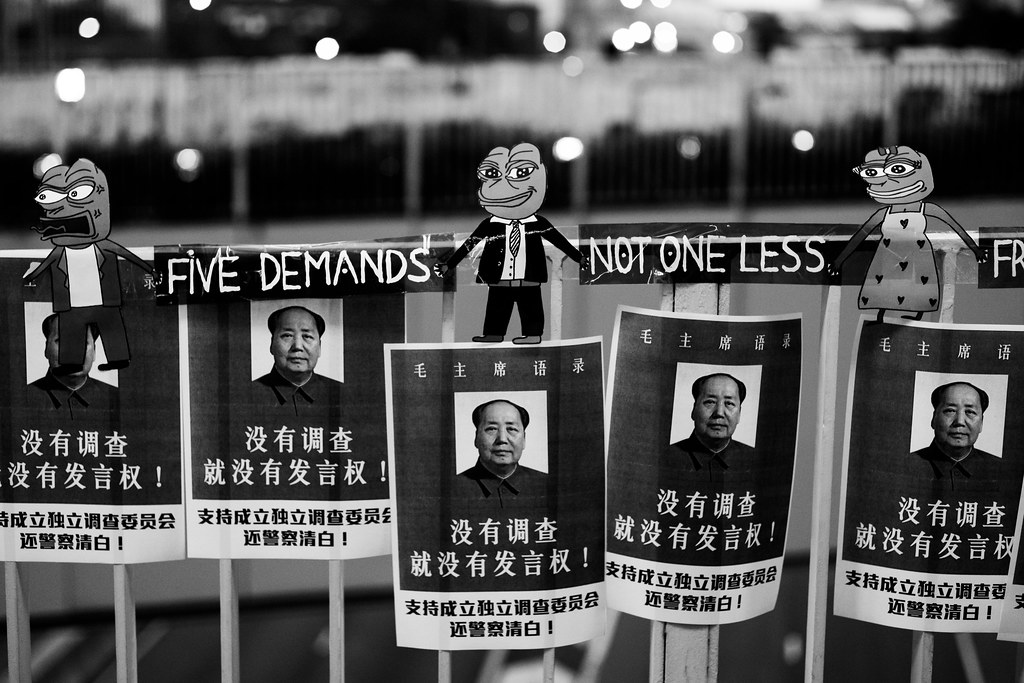
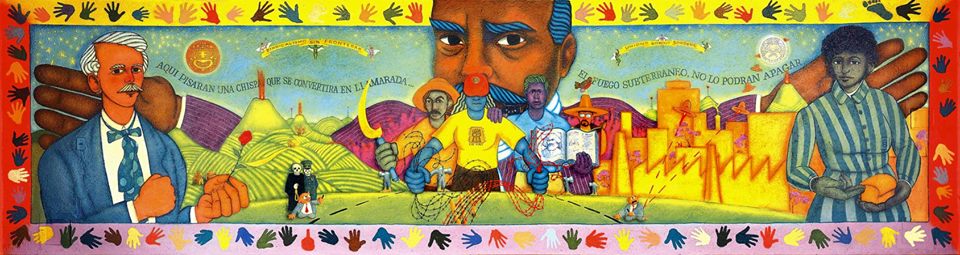
Nadine Bloch, creative resistance and nonviolent direct action educator and practitioner, explores how some of the most impactful and memorable moments from civil resistance and nonviolent movements are sung by the masses, printed by the thousands, enacted through craft, painted in vivid color, or performed in traditional dress. This webinar takes a critical look at Creative Cultural Resistance: the broad use of arts, literature, and traditional practices in the service of protest and political and social actions.
Nadine Bloch teases out the strategic powers of cultural resistance. Through compelling examples this talk covers the immense diversity of methodologies that have been employed in resistance, from 2-D and 3-D arts, to sound/music and theater/movement arts. From literature and crafts, to documentation and delineation of space, as well as rituals and language preservation, we will look at the power of cultural work in organizing, mobilizing and grounding actions.
"Often such little small cultural experiments open up space and possibility for the bigger changes to happen. The real seeds for revolutionary changes can grow in artistic practices."--John Jordan
"Art is not a mirror held up to reality, but a hammer with which to shape it."--Bertolt Brecht
"The role of the artist is to make the revolution irresistible."--Toni Cade Bambara